How to Last Longer in Bed: Positions and Techniques
Learn how to last longer in bed with proven positions and techniques. Control premature ejaculation and improve sexual stamina naturally.
Lasting longer in bed is a common concern for many men. The good news is that sexual stamina can be improved with the right techniques, positions, and mindset. This guide covers proven methods to help you last longer and satisfy your partner.
“Sexual stamina is not about lasting as long as possible — it’s about lasting long enough for both partners to enjoy the experience. Research shows that the average time from penetration to ejaculation is 5-7 minutes, and most women need 10-20 minutes of stimulation to reach orgasm. The key is learning techniques to extend pleasure and focusing on your partner’s satisfaction.” — Dr. James Chen, Board-Certified OB/GYN
Research from The Journal of Sexual Medicine (2021) found that men who practiced edging and pelvic floor exercises increased their lasting time by 45% within three months. The most effective techniques were consistent practice, communication, and focusing on partner pleasure.
Understanding Sexual Stamina
What’s “Normal”?
The average time to orgasm during intercourse is 5-7 minutes. However:
- There’s no “right” amount of time — Pleasure matters more than duration
- Duration varies — It changes based on arousal, position, and connection
- Premature ejaculation — Occurs in about 1 in 3 men at some point
- Delayed ejaculation — Also a concern for some men
Factors Affecting Stamina
- Arousal level — Higher arousal leads to faster orgasm
- Position — Some positions create more stimulation
- Stress and anxiety — Mental state affects physical response
- Physical fitness — Stamina improves with exercise
- Age — Stamina changes over time
- Frequency — Regular sex can improve control
Positions That Help You Last Longer
1. Spooning
The slowest, most intimate position:
- Both partners lie on their sides
- Minimal movement required
- Easy to control pace
- Deeply intimate
Why it works: The slow, grinding motion reduces stimulation intensity while maintaining connection.
2. Prone Bone (Flat Doggy)
A deep but controlled position:
- The receiving partner lies flat on their stomach
- The penetrating partner enters from behind
- Movement is limited and controlled
- Deep penetration without rapid movement
Why it works: The flat angle limits the penetrating partner’s ability to thrust quickly, naturally slowing the pace.
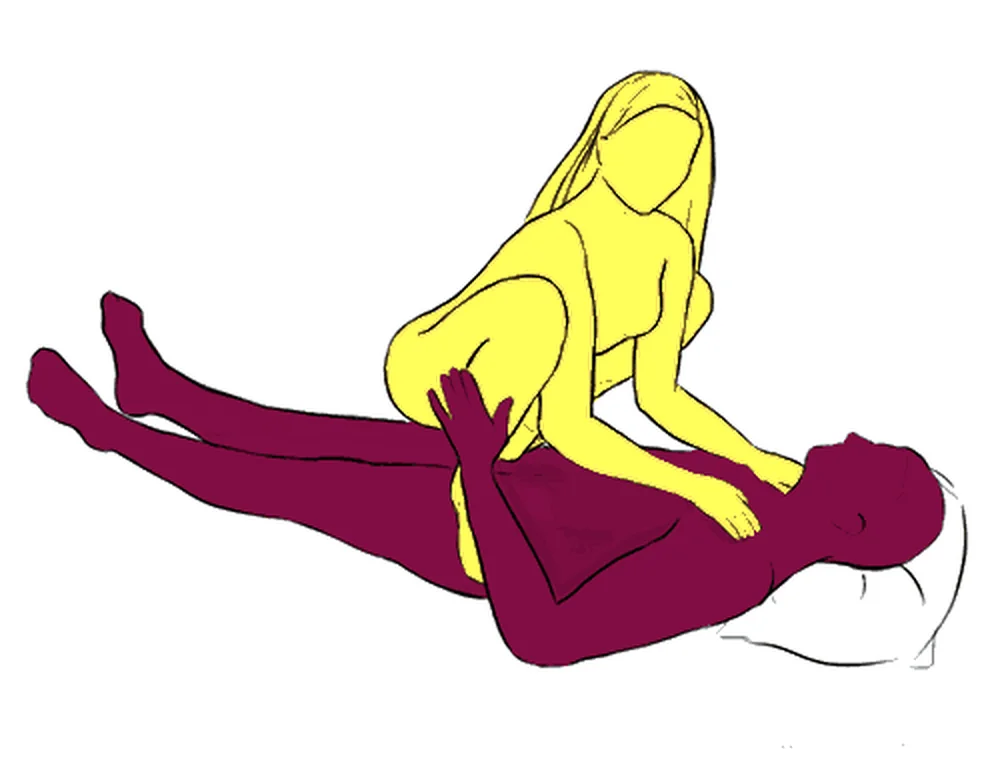
3. Woman on Top (Partner-Controlled)
The receiving partner controls everything:
- The receiving partner on top
- Controls pace, depth, and rhythm
- The penetrating partner can relax
- Easy to slow down when needed
Why it works: The penetrating partner can focus on controlling their response while the receiving partner controls the pace.
4. Side-Lying Face-to-Face
An intimate, slow position:
- Both partners lie on their sides facing each other
- Allows for deep connection and eye contact
- Slow, grinding motion
- Easy to communicate and adjust
Why it works: The intimate connection helps the penetrating partner focus on their partner’s pleasure rather than their own release.
5. The Lotus
A deeply connected position:
- Both partners sit facing each other
- Legs intertwined
- Slow, circular motion
- Maximum body contact
Why it works: The full body contact and slow movement reduce stimulation intensity while maximizing connection.
Techniques to Last Longer
1. The Start-Stop Method
The most effective technique for lasting longer:
- Stimulate until close to orgasm (about 7 on a 1-10 scale)
- Stop all stimulation completely
- Wait 30-60 seconds until the urge subsides
- Resume stimulation
- Repeat 3-4 times before allowing orgasm
How it works: This trains your body to recognize and control the point of no return.
Practice: Try this during masturbation first, then with your partner.
2. The Squeeze Technique
A variation of the start-stop method:
- Stimulate until close to orgasm (about 7 on a 1-10 scale)
- Squeeze the head of the penis firmly for 10-15 seconds
- Release and wait until the urge subsides
- Resume stimulation
- Repeat as needed
How it works: The squeeze reduces blood flow and temporarily reduces arousal.
Tip: Use your thumb and forefinger to squeeze just below the head.
3. Deep Breathing
Breath control helps manage arousal:
- Breathe deeply into your belly (not chest)
- Slow, controlled exhales (longer exhale than inhale)
- Focus on relaxing your body (especially pelvic floor)
- Use during intimate moments to maintain control
How it works: Deep breathing activates the parasympathetic nervous system, which counteracts the arousal response.
Practice: Try 4-7-8 breathing (inhale for 4, hold for 7, exhale for 8).
4. Kegel Exercises
Strengthening your pelvic floor improves control:
How to find your PC muscles:
- Stop urination mid-stream (the muscles you use)
- These are your pelvic floor muscles
Exercise routine:
- Contract the muscles for 5 seconds
- Relax for 5 seconds
- Repeat 10 times
- Do 3 sets daily
How it works: Stronger pelvic floor muscles give you better control over ejaculation.
5. Distraction Techniques
Redirect your attention when close to orgasm:
- Think about something else (not sexual)
- Focus on your partner’s pleasure (not your own)
- Count backwards from 100
- Recite something (poem, song lyrics)
How it works: Mental distraction reduces arousal intensity.
Tip: This works best when combined with other techniques.
6. Change Positions
Switching positions can reset your arousal:
- Start in one position until close to orgasm
- Switch to a less stimulating position
- Continue in the new position
- Switch again if needed
Best “reset” positions:
- Spooning (less stimulation)
- Oral sex (receiving partner’s pleasure focus)
- Manual stimulation (different sensation)
7. Use Thicker Condoms
Thicker condoms reduce sensation:
- Extra-thick condoms reduce stimulation
- Desensitizing condoms have mild numbing agent
- Practice with condoms during masturbation
How it works: Reduced sensation means slower buildup to orgasm.
8. Masturbate Before Sex
Coming once before intercourse can help:
- Masturbate 1-2 hours before sex
- Reduces sensitivity for the main event
- Reduces anxiety about lasting long enough
How it works: The refractory period after orgasm makes it harder to reach orgasm again quickly.
Mental Techniques
1. Focus on Your Partner
Shifting focus from your own pleasure to your partner’s:
- Watch their reactions — What makes them moan?
- Use your hands — Stimulate them during penetration
- Ask what feels good — Communication helps
- Prioritize their pleasure — Your orgasm can wait
2. Slow Down
Rushing leads to faster orgasm:
- Move slowly — Resist the urge to speed up
- Use shallow penetration — Deep penetration is more stimulating
- Pause frequently — Stop, breathe, continue
- Focus on sensation — Not on reaching orgasm
3. Accept Imperfection
Performance anxiety makes things worse:
- Don’t worry about lasting long enough — Pressure increases anxiety
- Focus on pleasure — Not performance
- Laugh at awkward moments — It’s okay to be human
- Communicate with your partner — They probably don’t mind
4. Practice Mindfulness
Being present in the moment:
- Focus on sensations — What do you feel right now?
- Don’t think about orgasm — Focus on the journey
- Breathe deeply — Stay grounded
- Accept your body’s response — Don’t fight it
Lifestyle Factors
Exercise Regularly
Physical fitness improves sexual stamina:
- Cardio — Increases endurance
- Kegel exercises — Improves control
- Yoga — Improves flexibility and breathing
- Strength training — Boosts testosterone
Manage Stress
Stress kills sexual performance:
- Meditation — Reduces anxiety
- Deep breathing — Calms the nervous system
- Regular sleep — Improves overall health
- Professional help — If stress is chronic
Eat Well
Nutrition affects sexual function:
- Z-rich foods — Zinc supports testosterone
- Nitric oxide foods — Improve blood flow (beets, leafy greens)
- Avoid excess alcohol — It delays orgasm but reduces sensation
- Stay hydrated — Dehydration affects performance
When to Seek Help
Consider professional help if:
- Premature ejaculation persists despite techniques
- Delayed ejaculation is affecting your relationship
- Performance anxiety is severe
- Underlying medical conditions may be involved
- Psychological factors are significant
Options:
- Urologist — For medical evaluation
- Sex therapist — For psychological factors
- Couples counseling — For relationship issues
The Bottom Line
Lasting longer in bed is a skill that can be learned. By combining the right positions, techniques, and mindset, you can improve your stamina and satisfy your partner. Remember: the goal isn’t to last forever — it’s to create a pleasurable, connecting experience for both of you.
Start with one or two techniques, practice regularly, and be patient with yourself. Improvement takes time, but it’s absolutely achievable.
Frequently Asked Questions
What’s considered normal for lasting longer in bed?
The average time from penetration to ejaculation is 5-7 minutes. However, there’s no “right” amount of time — pleasure matters more than duration. Premature ejaculation occurs in about 1 in 3 men at some point and is highly treatable. The key is lasting long enough for both partners to enjoy the experience.
How long should sex last for mutual satisfaction?
Research suggests that 10-20 minutes of penetrative sex is ideal for most couples, but this varies widely. Many women need 10-20 minutes of clitoral stimulation to reach orgasm, which can happen alongside penetration. Focus on your partner’s pleasure rather than a specific duration.
What are the most effective techniques for lasting longer?
The start-stop method, squeeze technique, and pelvic floor exercises are the most evidence-based approaches. Deep breathing, changing positions, and focusing on your partner’s pleasure also help. Combining multiple techniques yields the best results — practice consistently for 2-3 months to see improvement.
Can Kegel exercises really help with premature ejaculation?
Yes. Strengthening your pelvic floor muscles improves control over ejaculation. Studies show that men who practice Kegel exercises regularly can increase their lasting time by 45% within three months. The exercises are simple: contract your pelvic floor muscles for 5 seconds, relax for 5 seconds, repeat 10 times, three sets daily.
When should I see a doctor about premature ejaculation?
See a doctor if premature ejaculation persists despite practicing techniques, if it causes significant distress, or if it’s affecting your relationship. A urologist can evaluate underlying medical conditions, and a sex therapist can address psychological factors. Effective treatments exist, including medications and therapy.
How do I talk to my partner about lasting longer?
Approach the conversation with vulnerability and focus on mutual pleasure. Say something like, “I want to make sure we’re both enjoying our time together. Can we try some techniques that might help me last longer?” Frame it as a shared goal, not a personal failure. Most partners are supportive and appreciative of the honesty.
Related Reading
- Edging Technique — Master the start-stop method
- Kegel Exercises for Men — Strengthen pelvic floor muscles
- How Long Should Sex Last? — Understand duration and satisfaction
- Female Orgasm Guide — Focus on partner’s pleasure
- Sexual Communication Tips — Discuss sensitive topics
- Best Positions for Control — Choose positions that help you last
Written by
CoupleSexPosition
Expert Verified
Reviewed by certified health professionals for accuracy and safety.
Meet Our Experts